Almost every home service job of any complexity ends up with variations. The customer changes their mind. The site reveals something unexpected. Scope creeps organically. Handled well, variations are 15–25% of a healthy home service business's revenue. Handled badly, they are the single biggest source of end-of-job disputes and lost repeat work.
The difference is not the variations themselves. It's how you price and communicate them.
Why variations feel adversarial
The tension around variations comes from a simple fact: the customer feels they've already agreed a price, and now the price is going up. Every mid-job price change feels, to them, like a small betrayal — even when the change is objectively their fault or the site's fault.
The pro doing the work knows the variation is legitimate. The customer knows nothing of the sort. Bridging that gap is 90% of the challenge.
The four types of variation
Different variations need different handling.
1. Customer-initiated scope change. "Actually, can we change the tap?" — clearly the customer's decision. Easiest to price and least contentious.
2. Site-revealed necessity. "The joist behind this wall is rotten and needs replacing before we can proceed." — Not your fault, not their fault, but the fix is required. Needs careful communication.
3. Estimate correction. "Turns out the pipe run is 6 metres, not 3 like I originally quoted." — Your estimate was off. Hardest to charge for without eroding trust.
4. Suggested upgrade. "While we're at it, we could replace the isolator valves for another £40." — Optional. Should always be optional.
Each of these has a different customer justification, different pricing logic, and a different acceptance route. Lumping them together is where trust dies.
The variation communication script
Whatever the type, well-run variations follow the same conversational structure.
Name the change specifically. "The joist under the bath is rotten — you can see it here [photo]. It needs replacing before we can fit the new bath."
Explain the "why now" clearly. "If we fit the new bath on top of this joist, it'll fail within a couple of years and everything will have to come out again."
State the specific cost implication. "Replacing this joist and making good will add £280 to the job — £160 for the joist and materials, £120 for the extra half day."
Offer a decision, not just a bill. "You've got three options: we can replace it now (recommended), we can proceed as-is (I'll flag it in writing), or we can pause the job while you get another opinion. What would you like to do?"
Confirm in writing. Not verbally. A message, an in-app confirmation, a signed line. This is the step that keeps trust intact three weeks later when they've forgotten the conversation.
Pricing variations profitably
Variations are typically higher margin than the original quote, and rightly so — you're mobilised, tooled up, and providing the customer with speed they can't get elsewhere. A fair variation price is often 15–25% higher unit rate than the equivalent standalone job.
However, transparency is critical. If your original quote lines are itemised, your variations should be itemised in the same format. "Extra £280" is suspicious. "Replace joist: materials £80, extra labour 3hrs at £65 = £275" is defensible.
The written approval rule
Never do variation work without written approval. Not verbal. Not "yeah, sure, go ahead." Written.
The reason: in three weeks, when the invoice arrives and the total is 15% higher than the quote, the customer will genuinely not remember agreeing. Not because they're dishonest — because there's a lot going on in their head and small verbal agreements evaporate.
A photo of a WhatsApp message. An in-platform approval tap. An email reply. Any of these are enough. Just not "he told me to crack on."
Handling estimate corrections
The hardest variation to charge for is the one where your original estimate was wrong. Two rules.
Own it. Don't pretend the site is more complex than it is. "I underestimated this — the pipe run is longer than I quoted." Customers respect that.
Split the difference. For a genuine estimating error, offer to eat half the overrun. For a large error (over 20% of the original quote), consider eating more. This preserves trust and repeat work.
Trying to charge full price for your own estimating mistakes is the fastest way to lose a customer for life.
When to say no
Not every variation should be accepted. Sometimes customers ask for changes that will compromise the finished job, break code, or drag out the timeline unreasonably.
Say no clearly. "I can't do that in the way you're asking — here's why. Here's what I can do instead." Customers trust pros who push back with reasons. They distrust pros who agree to everything and then produce bad work.
The variation tracker
Every ongoing job should have a running list of variations — approved, pending, and declined. That list should be visible to you, your team and, ideally, the customer.
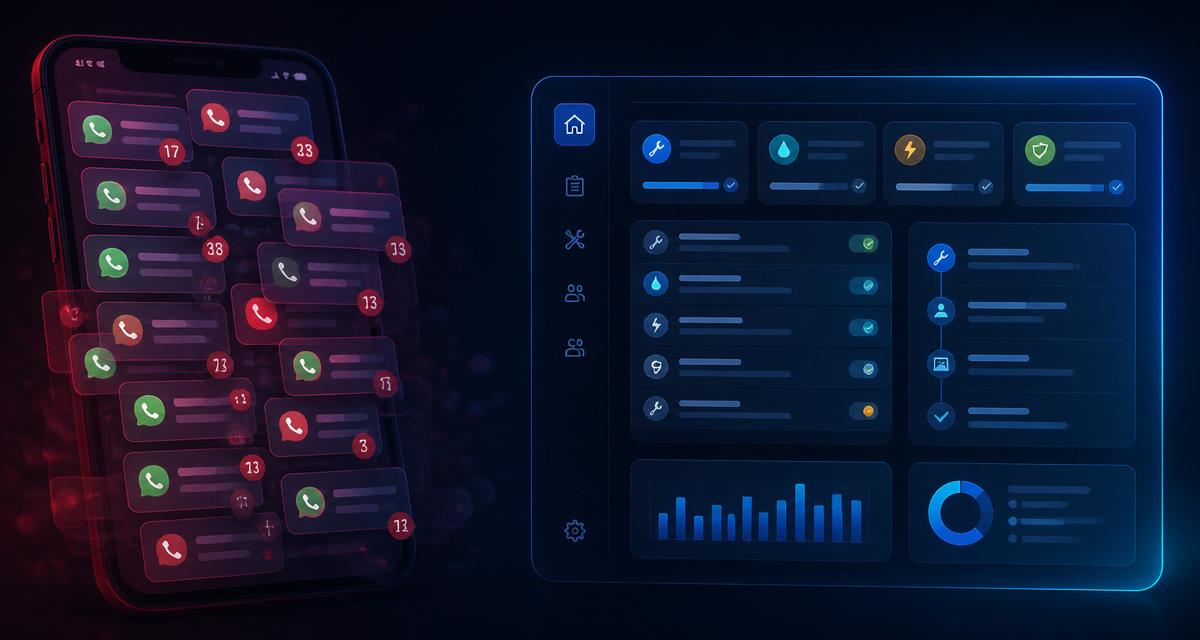
Trying to remember variations in your head or in a WhatsApp thread is how they slip through and don't get invoiced. Pros with a proper tracker capture 25–40% more variation revenue than pros without one.
Absolutely tracks variations against every job with photo evidence, written approval, and automatic invoice inclusion — so nothing slips and every variation is defensible. Free for a limited time.