Every home service pro takes photos on the job. Most of those photos then sit in a camera roll, unused, until the phone is upgraded and they're lost forever. This is one of the most valuable, underused assets in the entire industry. Used systematically, job photos close disputes before they start, dramatically increase customer trust, drive repeat work, and generate marketing content — all for zero incremental effort.
The three jobs a photo does
A good jobsite photo does three separate jobs.
1. Evidence. It proves what state the site was in when you arrived, what was actually done, and what condition it was left in. Six months later when a customer says "the leak has come back and I think it's because you did something wrong", your photo shows the pipe was fine when you left. Case closed.
2. Reassurance. When a customer sees the "after" photo, especially on hidden work (behind walls, in lofts, under floors), they trust the invoice. Trust drives faster payment and more referrals.
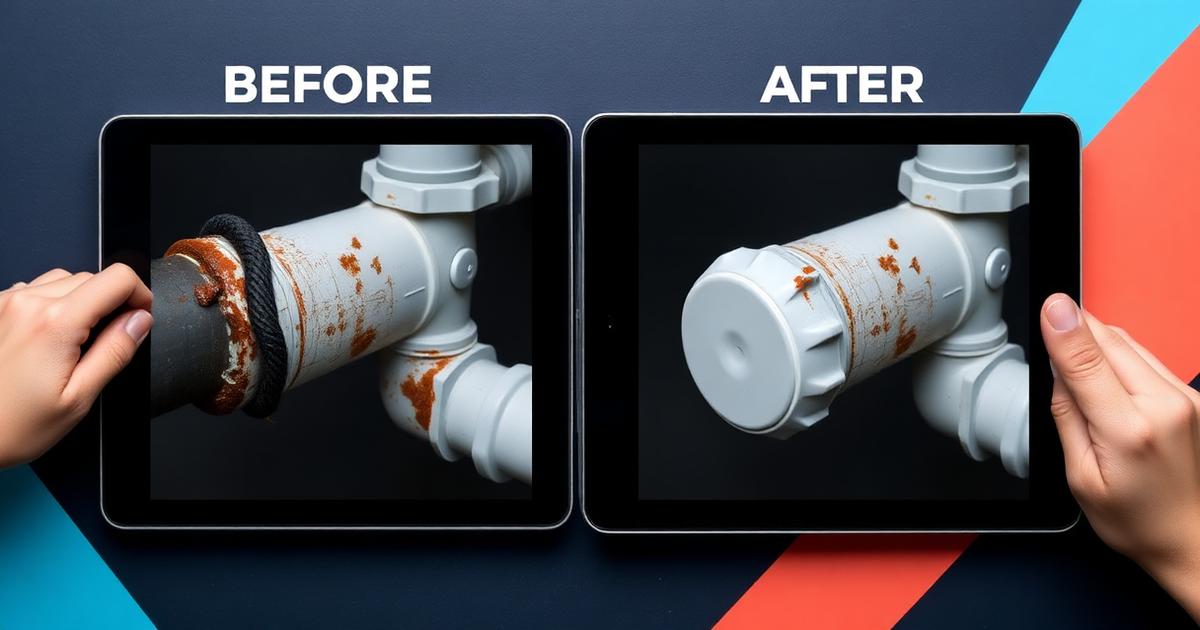
3. Marketing. Great before/after photos are the highest-converting content a home service business can produce. Every roofer, plumber, decorator or handyman should have a rotating library of them.
Most pros take photos but only use them for the first job — evidence — and only when they remember to look for them.
The four-photo minimum
Well-run home service crews hit a four-photo minimum on every job.
1. Access. How you got in, what state the space was in. Confirms you arrived, when, and that you didn't leave anything open or damaged.
2. The problem. Close-up of the fault. Anchors the customer's memory of why they hired you.
3. During. At least one photo mid-job. Especially important for any work that will be hidden (plumbing behind walls, wiring in ceilings, damp treatment).
4. Complete. The finished work, clearly showing the resolution. Also a wide shot of the area left clean.
Four photos, two minutes total. Every job. No exceptions.
Emergencies and high-risk jobs (gas, structural, damp) may need 10–20. That's fine. Never fewer than four.
The organisation problem
The reason photos don't get used isn't that pros don't take them. It's that they don't get organised. Photos on a phone camera roll are useless because you can't find them when you need them.
The fix is straightforward: every photo has to be attached to the job it belongs to, at the moment it's taken. Not "we'll sort it out later." At the moment.
A job management platform that captures photos directly into the job record (rather than the camera roll) solves this once and never asks about it again. Six months later, when you need the photo, it's one tap away.
The digital job report
The single biggest use case for job photos is the digital job report delivered to the customer at completion.
A one-page PDF or link containing: what was reported, what was done, four to eight photos, materials used, any variations, warranty details. Sent by text or email as you leave.
Home service pros who introduce digital job reports see repeat work jump by 20–40% inside six months. Customers who receive them tell friends. Property managers who receive them recommend you to other properties in their portfolio. The report is the marketing.
Photos as insurance and defence
Beyond marketing, photos are legal defence. If a customer claims damage that predates your work, your access photo proves it. If a claim is made against your work six months later, your completion photo proves the condition you left it in.
For gas and electrical work, jurisdictions increasingly expect photo documentation of key installations. Insurers offer better premiums to businesses that document with photos.
Not documenting is not free. It's just deferred risk.
The privacy consideration
Customer photos include the inside of people's homes. That comes with privacy responsibilities.
Only take photos of what's relevant to the work. Don't photograph personal items unnecessarily. Use the customer's photos only in the ways they've consented to — a customer whose leak you fixed hasn't automatically consented to their kitchen appearing in your Instagram feed.
For marketing use, ask permission specifically. Most customers will happily consent to before/after photos of the actual work if you crop out identifying details. Just ask.
What to do this week
Set a four-photo minimum on your team's next 10 jobs. Send a digital job report on the last five. Compare the customer response to your usual close-out.
You'll notice two things: fewer post-job questions from the customer, and warmer subsequent contact. That's the photo asset starting to earn its keep.
Absolutely captures job photos directly into each job's record, generates a branded digital job report at completion, and builds a searchable per-property history so you can find anything from any job in seconds. Free for a limited time.