Home service pros are some of the last small business owners still handing over paper invoices at the end of a job. It's habit, it's what customers "expect", and it feels traditional. It's also, without exaggeration, costing the average small trade business between £8,000 and £20,000 a year in lost revenue, late payments and admin time. This isn't a soft "you should really digitise" argument. Here is the math.
The four hidden costs
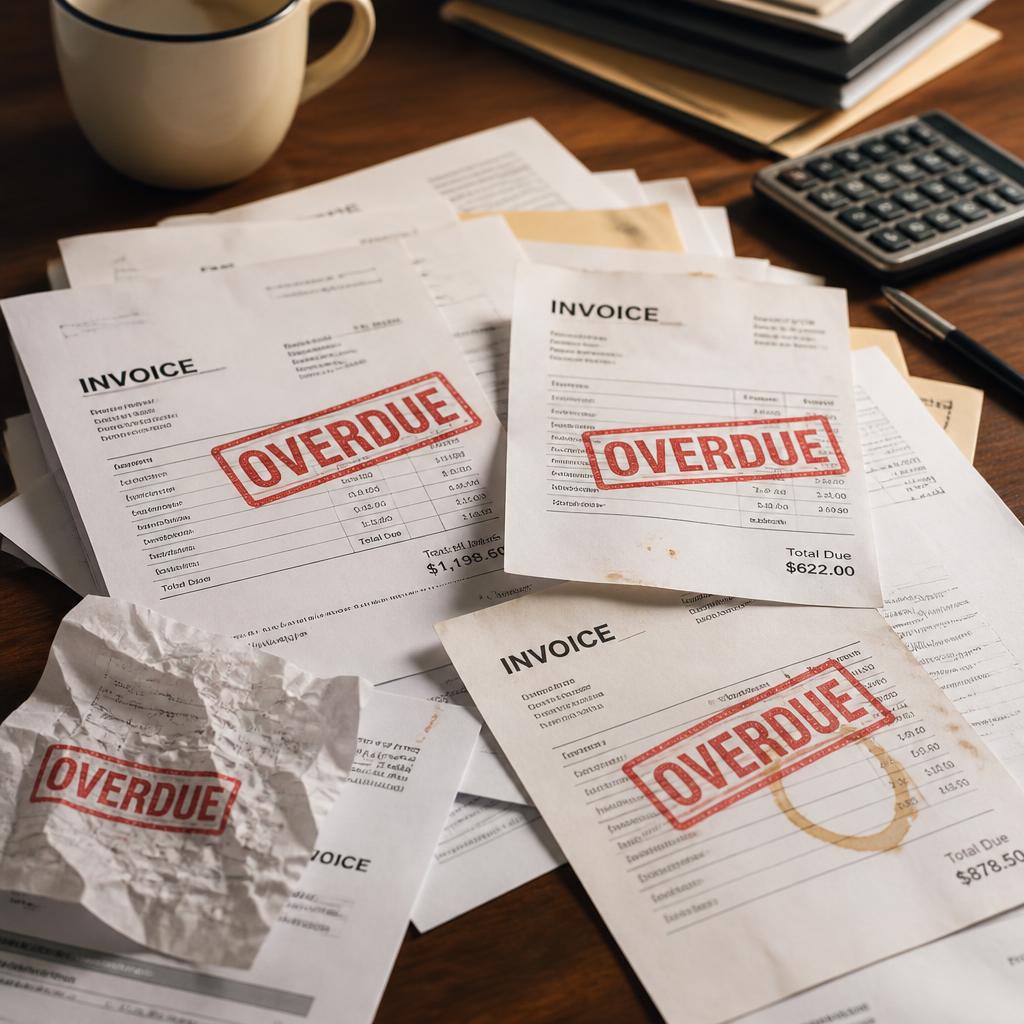
Cost one: unpaid invoices. Paper invoices get lost. Between the customer's kitchen counter, their post pile, the folder their partner "tidied", and the ones that never made it out of your van in the first place, roughly 3–5% of paper invoices never get paid at all. For a £250k business, that's £7,500–£12,500 a year of pure lost revenue.
Cost two: late payments. Even the ones that do get paid, get paid slower. Industry data on trade invoicing consistently shows paper invoices average 34 days to payment, versus 12 days for digital invoices with an integrated payment link. On a £250k business with 30% margins, that gap in cashflow costs you roughly £1,800 a year in either overdraft interest or foregone growth investment.
Cost three: admin time. Every paper invoice takes about 15 minutes to produce, chase, and reconcile. Digital invoices take about 3. If you send 20 invoices a month, that's 4 hours a month or nearly a full working week a year — usually done evenings and weekends. At a technician's real hourly rate, that's £2,400 a year in your own unpaid time.
Cost four: disputes. Paper invoices don't have timestamps, delivery confirmation, or a paper trail beyond the paper itself. When a customer disputes a charge, you're relying on memory. Digital invoices carry proof of sending, proof of viewing, and a linked job record with photos and scope. HSPs who switch to digital invoicing report dispute rates dropping by 60–80%.
Add those four costs together and you're looking at £10k–£20k a year for a typical small home service business. That's a technician's van, or three months' payroll, or the deposit on a bigger property.
Why "the customer prefers paper" is a myth
The most common objection to digital invoicing is that older customers want paper. Two decades of adoption data across every industry says the opposite. Customers over 60 are actually the fastest adopters of digital invoicing once they experience it, because it's easier to search when they need to find it and easier to pay when the reminder arrives.
What customers actually want is an easy way to pay. Paper works because it's familiar. Digital works better because it removes friction: click link, tap card, done. Any home service pro who has switched has seen the same result — payment times drop by more than half in the first month.
What a good digital invoice looks like
Not all digital invoices are equal. A PDF attached to an email is barely better than paper. A good digital invoice does five things.
It arrives instantly, from your phone, before you've left the driveway. It shows the customer exactly what they're paying for, with line items linked back to the job's photos. It includes a pay now button that accepts card, bank transfer and increasingly Apple Pay or Google Pay. It sends a polite automatic reminder at 3, 7 and 14 days if unpaid. It marks itself paid in your system the moment the money arrives, so you don't have to reconcile.
That last point is where the real time saving hides. If you're still ticking off paid invoices by cross-referencing your bank statement to a spreadsheet, you're doing bookkeeping the 1990s way.
The transition anxiety
The reason most home service pros haven't switched isn't cost — most invoicing tools are £15–£40 a month, cheaper than the paper and stamps they replace. It's transition anxiety. "What if it doesn't sync? What if a customer can't figure it out? What if my accountant hates it?"
In practice, the transition takes about a week. Send your next invoice digitally, then the next. Keep a small stack of paper invoices in the van for the occasional customer who genuinely can't handle it — you'll find yourself using them once a quarter, if that. Every accountant on earth prefers digital invoices because they eliminate data entry.
What to do this month
Pick a digital invoicing tool this week — ideally one integrated with your job management, not a standalone. Send your next five invoices through it. Time how long each one takes to produce and how long each one takes to be paid. Compare against your last five paper invoices.
If the numbers don't shock you, you're the exception. For everyone else, the math will do the arguing.
Absolutely includes digital invoicing linked directly to each job's scope, photos, quote, and variations — one tap from completion to invoice, one tap for the customer to pay. Free for a limited time.