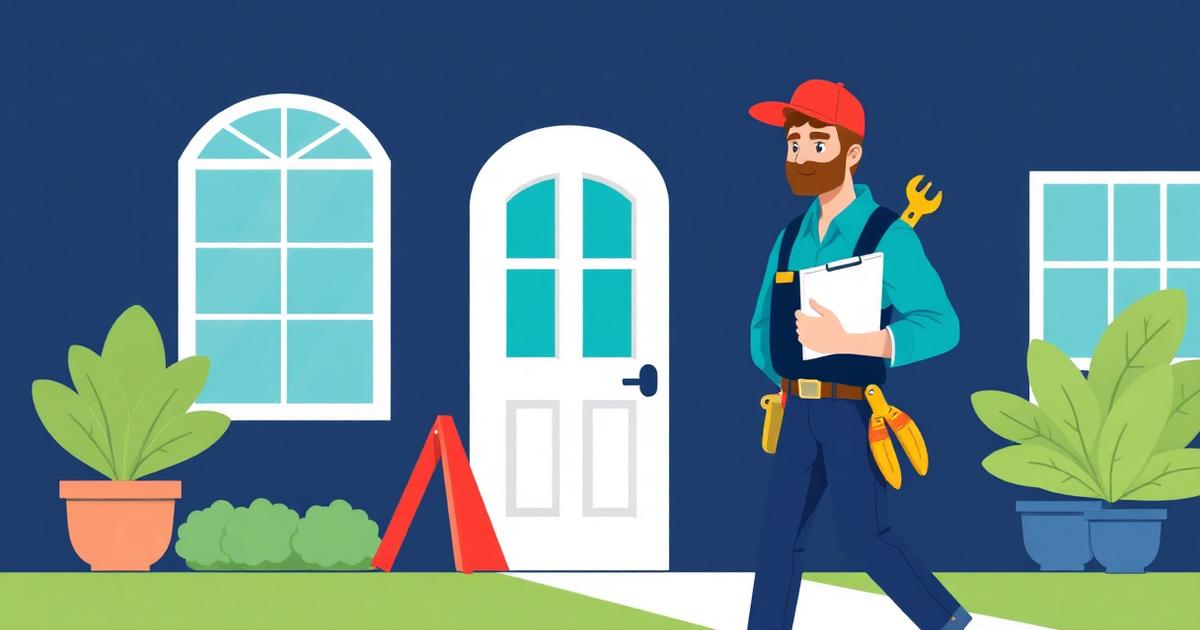
Every home service business hits the same wall at roughly the same revenue: somewhere between £150k and £250k a year for a solo operator. That's the point at which one person, one van and one phone physically cannot serve any more customers without something falling over. Working harder doesn't work — you're already at 60 hours a week. Charging more only takes you so far. The only way through the wall is to become a crew.
The problem is that most solo pros don't know how to make that jump, and the ones who try often make it badly. They hire too soon, hire wrong, don't delegate, and end up doing all their own work plus paying someone else. Two years later they've burnt out and gone back to being a one-man band.
Here's a five-step playbook that works.
Step 1: Systemise before you hire
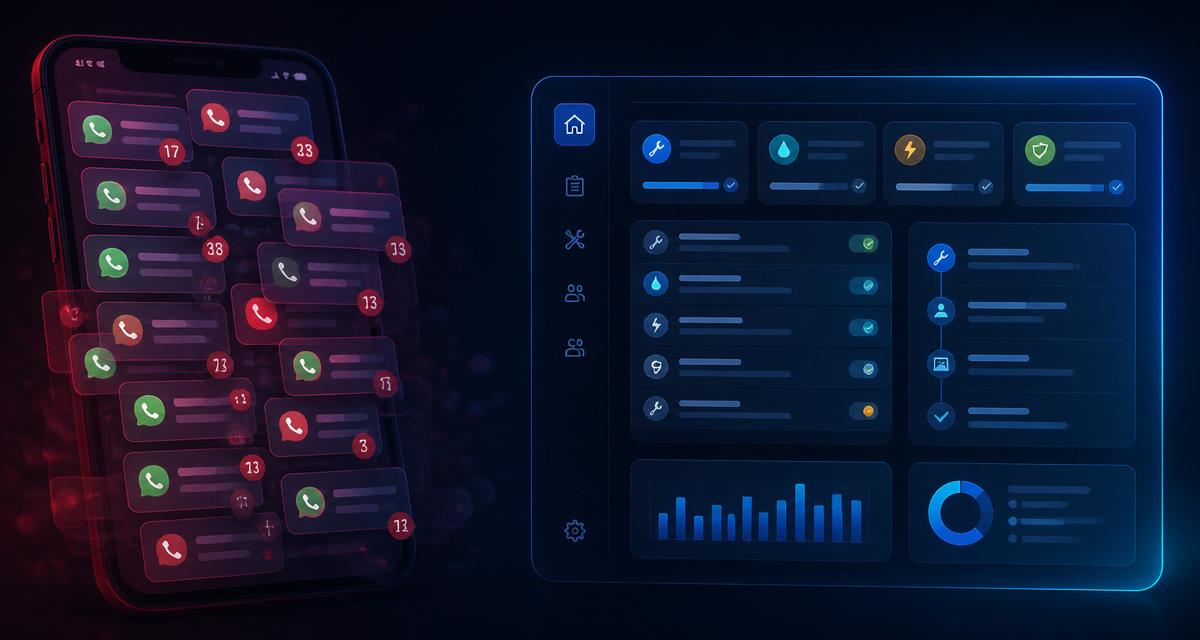
The single biggest mistake solo pros make is hiring first and systemising after. The problem is that when everything lives in your head, you can't hand any of it over. A new hire needs somewhere to look up prices, somewhere to see today's jobs, somewhere to log what they did. If those places don't exist yet, your first employee will spend six months interrupting you every fifteen minutes.
Before you hire anyone, get three things out of your head and into a system: your job pipeline, your pricing, and your customer records. It doesn't have to be perfect. It has to exist.
Step 2: Hire for the work you don't want to do
Solo pros tend to hire another version of themselves — another tech, another van, more jobs done in a day. That's the second-biggest mistake. The bottleneck in most solo home service businesses isn't hands on tools. It's quoting, scheduling and invoicing. Hiring a technician doubles your ability to do jobs. Hiring a coordinator doubles your ability to sell jobs.
If admin takes you two hours a day, and quoting takes you three, five hours of your day is being spent on £15/hour work when your time is worth £75/hour. Hire the coordinator first. Then the technician. Almost every scaled HSP will tell you they wish they'd done it in that order.
Step 3: Build a dispatch rhythm
The moment you have two vans on the road, dispatch stops being obvious. Who's doing what? Who has which materials? Who's closest to the next emergency? Whiteboards and group chats fall apart at three techs.
Adopt a daily rhythm. Every morning, either you or your coordinator confirms the day's jobs, materials needed, and who's on what. Every evening, techs mark jobs complete with photos and any variations. Weekly, review what got missed. This sounds bureaucratic. In practice it takes ten minutes a day and stops the chaos that eats 20% of your revenue.
Step 4: Standardise the customer experience
Solo pros carry the customer experience in their own personality. You show up, you're friendly, they trust you, you fix it, they pay you. When a technician arrives instead, that personal trust doesn't transfer automatically. Customers are more critical, quicker to complain, and slower to pay.
Fix this by standardising what the customer sees, not what the tech does. A branded uniform. A branded quote template. A "we're on our way" text. A digital job report with photos at the end. A branded invoice within 24 hours. Do those five things every time and customers will trust your business, not just you personally.
Step 5: Measure the right numbers
Solo pros measure revenue. That's fine when it's just you — every pound in the door is roughly a pound of profit. Once you have staff, revenue is misleading. A £200k month with 15% margins is worse than a £120k month with 30% margins.
Once you're a crew, start tracking four numbers: gross margin per job, unbilled hours, quote conversion rate, and days to payment. If any of those go the wrong way for two months in a row, something in the operation is broken and you can trace it back.
The mindset shift nobody warns you about
Scaling is not just an operational exercise. It's a role change. You stop being a technician who owns a business and start being a business owner who used to be a technician. Some pros love that shift. Some hate it. Both are valid, but you have to decide which one you are before you start hiring.
If you hate quoting and love being on the tools, don't scale — instead, put your prices up, work with fewer better customers, and stay solo. There is nothing wrong with a £250k solo operation with 40% margins. Some of the happiest HSPs we know run exactly that.
If you get a kick out of building something bigger than yourself, then scaling is worth every headache. Just do it in the order above and you'll skip 80% of the mistakes.
Where technology fits
You can scale a home service business with paper and grit. People did it for a hundred years. But every hour spent on paper is an hour not spent on customers, and every scaling HSP eventually adopts a proper task management platform because the alternative is drowning.
Absolutely was designed specifically for the solo-to-crew transition. It behaves like a phone when you're solo, and like a dispatch system when you're a team, and the transition happens without needing to migrate anything. Free for a limited time — a good moment to lay the groundwork before your next hire.